A plot for vegetables is an essential part of any Italian garden, or
indeed any Italian outdoor space. Next time you’re in a major Italian city,
look up and you’ll see plants tumbling over the rooftops, bright yellow dots of
citrus trees. Window boxes burst not just with flowers but also edibles. Out
in more rural areas, everyone keeps a patch in their garden for their kitchen
garden or ‘orto’.
Think of Italian vegetables and what springs to mind? Tomatoes, obviously,
although as we discussed at the Secret Garden last month, tomatoes are a
relatively recent introduction into Italy. Peppers, ditto. Aubergines, which
originated in Asia, have been cultivated in Italy since the early Middle Ages. All of these we grow in the Secret Garden.
Tomatoes are easy to raise in the UK, not so easy to get prolific fruit
from. We grow them indoors and outside, and the latter needs a warm sunny
summer to get the fruit ripening properly. Italians typically grow plum tomatoes: the varieties Roma, and San Marzano, are justly famous, and beefsteak-style
tomatoes such as Costoluto and Cuor di Bue.
Both hot and sweet peppers have become staples of the Italian kitchen
garden. Chilli peppers are probably slightly easier to grow outside in the UK than
sweet peppers which tend to do better in a greenhouse. Classic Italian varieties
include the Corno Rosso ('red horns', often known as bulls' horns) which are long, indeed horn-shaped, and sweet, plus the cayenne-style 'Piccante' peppers, and Ciliegia Piccante ('spicy cherry' peppers).
Aubergines will grow well in a conservatory or greenhouse and this year
made a decent fist of it outside on our sunny sheltered patio. As with tomatoes
and peppers, above, the seeds should be sown indoors early in the year, February
is a good time, and transplanted into large pots in mid to late spring. The fruits should be ready for picking about now, September into October.
If you look further afield, you’ll find many other vegetables and
also herbs which we think of as typically Italian and which will grow well here
in the UK.
Beans – Borlotti beans are an essential for us and they grow very well
outside here. Fresh borlotti beans are delicious, podded, simmered and dressed with olive oil – and impossible to buy in
the shops in the UK. Having said that, we do tend to dry most of our beans. Leaving them on the plant until
the pods are dark charcoal-purple in colour and hard and dry to the touch, the
pods are picked before the first frost and shelled. If the beans clatter on to
the worktop they’re dry and ready to store. If they land with anything like a
dull thud, they need more drying out, before being poured into airtight jars
and stored somewhere cool and dark for the winter.
Courgettes and squash for both winter and summer are grown
all over Italy. Two of my favourite squash for eating, the dense-fleshed Berrettina Piacentina and Marina di Chioggia, are cultivated up in the north of Italy. I always think they have a flavour somewhere between sweet potato and chestnut. We start these off in pots in April, then when they're ready to plant out, we add lots of well-rotted kitchen compost to the soil - squash and courgettes are hungry and thirsty plants. Squash will scramble along the ground and take over your beds and send long shoots out across the lawn given half a chance, so we train them upwards on to trellises.
With broccoli, another classically Italian vegetable, the clue is in the name. Broccolo refers to the flowerbud
which is essentially what the edible part of the plant is. We may think of
broccoli, cauliflower and similar as very British brassicas, but there are many
varieties cultivated in Italy. Broccoli has been grown in Italy since the 6th century
BC at least and became very popular in Roman times, but wasn’t brought to Britain
until the 1700s.
The large-headed green variety we think of as plain broccoli is known in Italy
as Broccoli Calabrese, or Calabrian broccoli. You’ll
also find red and purple headed Sicilian broccoli sold as cauliflower, and the
beautiful pale green Cauliflower or Broccoli Romanesco, below, with its spiral whorls and
crisp clean taste.
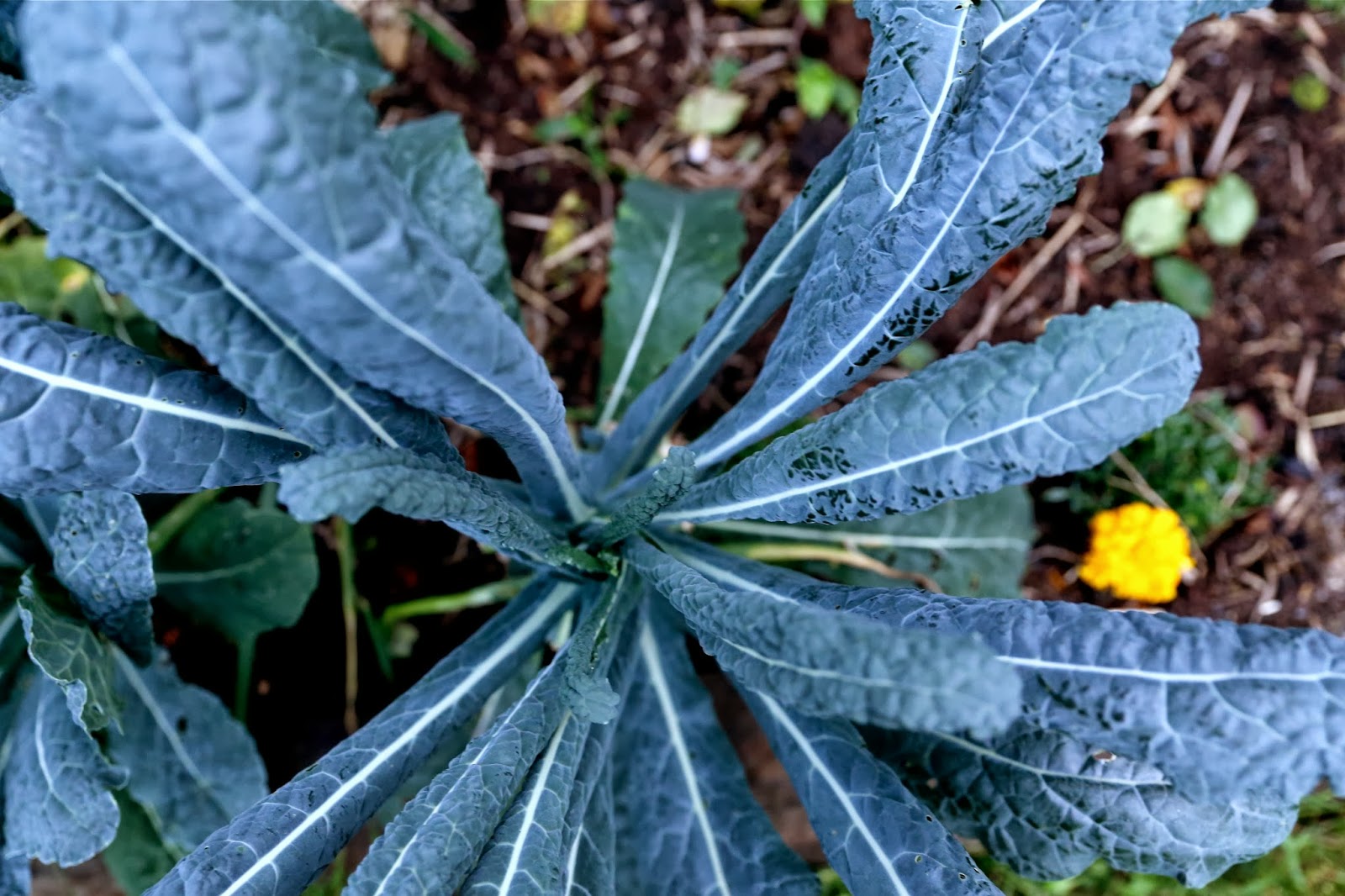
Italian Kale, or Tuscan kale, black kale, or cavolo nero, is the
currently fashionable variety with slim straight leaves in an inky green-black, or
even a bluish tinge to the tops. It grows beautifully in the south of England
and is a long-lived crop. Black kale sown in the spring will be ready to start
picking from August and will keep growing throughout winter. Even under snow or
when the ground is frozen, you’ll still be able to cut some of this kale which
makes it a good winter stand-by.
Salad greens are widely grown in Italy, especially rocket (rucola) which is
ubiquitous as a salad leaf in restaurants and easy to raise in a garden or pot.
The plant grows quickly and self-seeds freely, so, once sown, you will probably
always have some rocket, you just might not know exactly where. Also popular is
radicchio, as in the conical chicory called cicoria di Treviso and the round
red radicchio Palla Rossa (see top picture), and in Rome, a particular delicacy called puntarelle,
a dandelion-like plant. Puntarelle is harvested whole in autumn, then the leaves are sliced into thin strips and submerged in ice-cold water until they curl up. After drying off, the leaves are served as a crisp, slightly bitter-leaved salad.
 |
| Italian Cicoria Rossa di Treviso, harvested in November. It needs a period of cold in the ground to develop the deep red colour. |
 |
| Puntarelle: the fresh-tasting, crunchy inner leaves will be welcome as a salad in wintertime. |
And then there's root veg, perhaps surprisingly, including beetroot, carrots, and
turnips and of course, for the Italians, turnip leaves. Some turnip varieties, such as cimi di
rapa, are grown expressly for their tops and for a famous dish with oriechette pasta.
A part of the orto will be given over to herbs. Flat-leaved parsley is an
easy and inexpensive way to add an Italian note to many dishes. Oregano is grown
to lend that distinctive Mediterranean note to pizzas, and rosemary always seems
like a quintessentially Italian flavouring to me. Don’t be afraid of the cold
with rosemary, it’s perfectly hardy and I always find you get the best flowers
in the spring after a cold winter. It’s sitting in the wet that rosemary
dislikes. Make sure your soil or pots are well-drained.
As befits a fairly new country – Italy only became a single nation in
1870 and some parts of what is now Italy didn’t formally join up until after
WW1 – each region has its own food specialities. We are familiar with the
differences in regional cuisine in Italy, it’s only logical that this extends
to growing the food as well.
Italian vegetables often trumpet their provenance. Roma tomatoes come,
unsurprisingly, from Rome. Genovese basil is the classic succulent-leafed version we buy fresh in supermarket pots, while basil from Naples has much larger, frillier leaves. Florence fennel is named for its city of origin. Neapolitan
flat-leaved parsley comes from Naples, courgettes Romanesco from Rome again, and the long,
slim, pale green squash called Serpente di Sicilia (Sicilian Snakes) are indeed
from Sicily.
And this is useful when it comes to choosing varieties to grow, because
while our climate is nothing like the climate in the south of Italy or Sicily,
it isn’t so dissimilar to the growing conditions in the north of the country in
the hills and mountains, where the temperatures are cooler and the rainfall
more akin to our own.
Even this summer, which has been a cause for celebration in the UK, has seen us feeling lucky that outdoor tomatoes have ripened before the blight arrived. In Italy, any suggestion that tomatoes might not ripen would be greeted with astonishment.
If you want to grow specifically Italian vegetables, one very good place to start is Franchi Seeds, aka Seeds Of Italy. A family-run company for over 230 years, Franchi is based in Bergamo, with a UK operation in Harrow, and sources its seeds from local growers across the regions of Italy, often with the precise provenance named on the packet. You'll find their seeds online at http://www.seedsofitaly.com.
Look out for their open days in the UK about twice a year when you can explore the warehouse and get plenty of good growing advice.